Parenting Time Violations: What New Jersey Parents Can Do Next
Parenting time violations can disrupt a child’s relationship with a parent and create significant legal concerns. When one parent refuses scheduled visits, ignores court orders, or interferes with agreed arrangements, the affected parent may need legal solutions.
New Jersey law provides options for addressing these issues through enforcement actions and court involvement.
Understanding the available steps can help parents protect their rights while focusing on the child’s best interests. This guide explains what parents should know when parenting arrangements are not being followed.
Understanding Parenting Time Violations in New Jersey
A parenting order establishes the responsibilities and rights of each parent after separation or divorce. Violations happen when a parent fails to follow those legally established terms.
Common examples include:
- Refusing to release a child for scheduled visits.
- Repeatedly canceling approved parenting time.
- Changing arrangements without agreement.
- Preventing communication between the child and another parent.
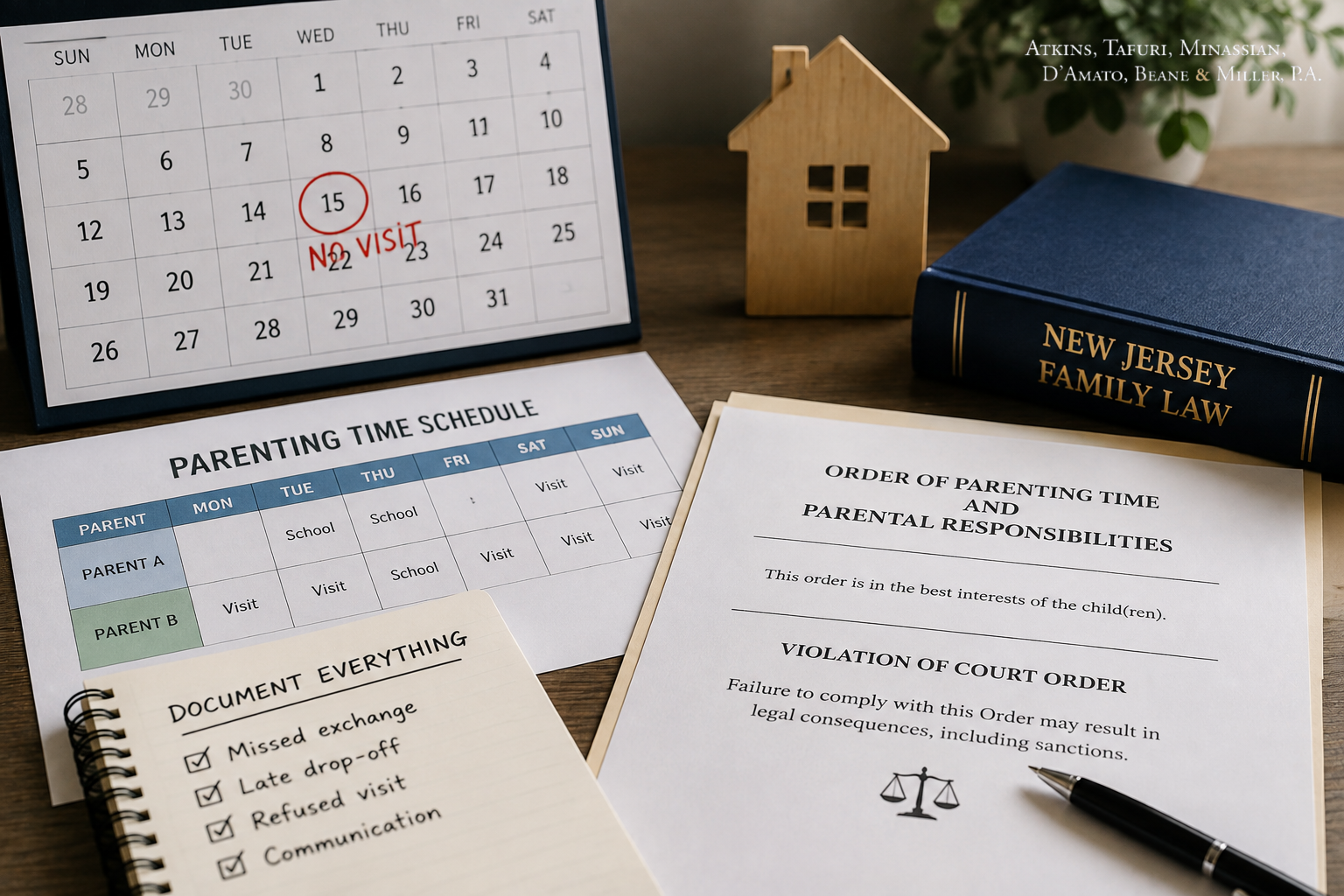
A written parenting schedule creates a clear framework for both parents. It identifies regular visits, holidays, vacations, and exchange details. When disagreements occur, having a specific schedule can make enforcement easier.
How Parents Should Respond When Visits Are Denied
The first step after a violation is gathering information. Parents should avoid escalating conflicts or making decisions that could create additional legal problems.
Helpful actions include:
- Keeping records of missed visits.
- Saving relevant messages.
- Reviewing existing court documents.
- Communicating calmly when possible.
Detailed documentation helps demonstrate whether violations are isolated mistakes or repeated behavior. Courts typically review the facts before deciding how to address the situation.
Parents may also need to understand their visitation rights when another parent interferes with court-approved time. Knowing these rights helps parents determine whether additional legal action may be necessary.
The Role of Agreements in Custody Matters
Many parents create written arrangements that explain how they will share parenting responsibilities. These documents can address schedules, transportation, holidays, and communication.
A properly approved agreement can provide structure and reduce future disagreements. However, parents should understand whether their agreement has been made part of a court order.
A clear parenting agreement can help prevent confusion between parents. It provides guidance about expectations and responsibilities after separation or divorce.
Seeking Court Assistance for Parenting Order Violations
When informal solutions fail, parents can ask the court for assistance. A judge may review evidence and determine whether enforcement measures are appropriate.
Possible court remedies may include:
- Additional parenting time.
- Changes to existing arrangements.
- Specific exchange requirements.
- Other corrective measures.
New Jersey courts focus on protecting children and maintaining healthy relationships with both parents. The goal is usually compliance rather than punishment.
A parent who repeatedly refuses to follow orders may face custody enforcement proceedings. These actions allow the court to address violations and require compliance with existing arrangements.
Resolving Ongoing Custody Conflicts Through Court
When parents cannot resolve disagreements independently, legal intervention may become necessary. A continuing conflict may affect a child’s stability and emotional wellbeing.
A custody dispute may involve disagreements about schedules, decision-making responsibilities, or communication between parents. Courts evaluate these matters carefully and focus on what arrangement serves the child’s best interests.
Parents should avoid:
- Ignoring existing court orders.
- Changing arrangements without approval.
- Using children as messengers.
- Creating unnecessary conflict.
A consistent approach can help protect the child’s relationship with both parents. Legal guidance can also help parents understand available options before taking action.
When Does a Parenting Time Violation Become Contempt?
Not every disagreement automatically results in legal penalties. Courts usually examine whether the violation was intentional and whether the parent had a legitimate reason.
A parent may face contempt of court when they knowingly disobey a valid court order. The court may consider:
- The seriousness of the violation.
- The reason for noncompliance.
- The effect on the child.
- Previous violations.
A judge has discretion when determining an appropriate response. The circumstances of each family situation are different.
How Family Court Handles Parenting Time Enforcement
New Jersey parents who experience repeated violations may need assistance from the court system. The court reviews evidence and determines whether changes or enforcement measures are appropriate.
The family court process may involve filing motions, attending hearings, and presenting documentation. Parents may provide records showing missed visits, communication attempts, or other relevant information.
Courts may consider:
- The child’s needs.
- Each parent’s involvement.
- The history of compliance.
- The reasons behind the dispute.
The outcome depends on the specific facts of each case. Parents should prepare carefully before requesting court intervention.
Can a Parenting Plan Be Changed After Violations?
A court-approved arrangement is designed to provide consistency for children and parents. However, circumstances can change over time.
A parenting plan may be modified when changes are necessary to support the child’s best interests. Repeated violations may become one factor the court considers when reviewing possible adjustments.
Possible modifications include:
- Updating exchange procedures.
- Creating clearer communication rules.
- Adjusting holiday schedules.
- Revising parenting responsibilities.
Parents should understand that changes generally require proper legal procedures. A parent cannot simply change terms without agreement or court approval.
Protecting Your Relationship With Your Child
Parenting time problems can create frustration and uncertainty. However, taking thoughtful legal steps can help protect important family relationships.
The attorneys at Atkins, Tafuri, Minassian, D’Amato, Beane & Miller, P.A. assist clients with family law matters involving custody, divorce, and post-judgment disputes. The firm provides experienced representation while helping families understand their legal options.
If you are facing parenting time violations, addressing the issue promptly may help protect your rights and your child’s relationship with you. Contact the firm through 201-967-5060 or use the contact page to discuss your situation.
Frequently Asked Questions
What happens if a child doesn’t want to see his father?
If a child does not want to see his father, the situation should be handled carefully. Parents should consider the child’s age, reasons, and emotional needs before making decisions. A parent generally cannot ignore a court order without approval.
Courts may review the circumstances and determine whether changes are necessary. A parenting plan can guide schedules, communication, and responsibilities. If concerns involve safety or serious conflict, legal guidance may help determine the appropriate next steps.
Can you control who your co-parent allows around your child?
A parent usually cannot control every person their co-parent allows around the child unless there are specific legal concerns. However, safety issues, inappropriate behavior, or harmful environments may justify court involvement.
Parents can raise these concerns during a custody dispute if they believe the child’s wellbeing is affected. Courts focus on the child’s best interests when reviewing these situations. Documenting concerns and following proper legal procedures can help parents address disagreements effectively.
How to deal with a toxic co-parent?
Dealing with a toxic co-parent requires patience, clear boundaries, and careful communication. Parents should keep discussions focused on the child and avoid unnecessary arguments. Maintaining records of conflicts can help if problems continue or affect parenting arrangements.
A consistent parenting schedule can create stability and reduce disagreements. If communication breaks down completely, parents may need legal support to address ongoing issues and protect their relationship with their child.