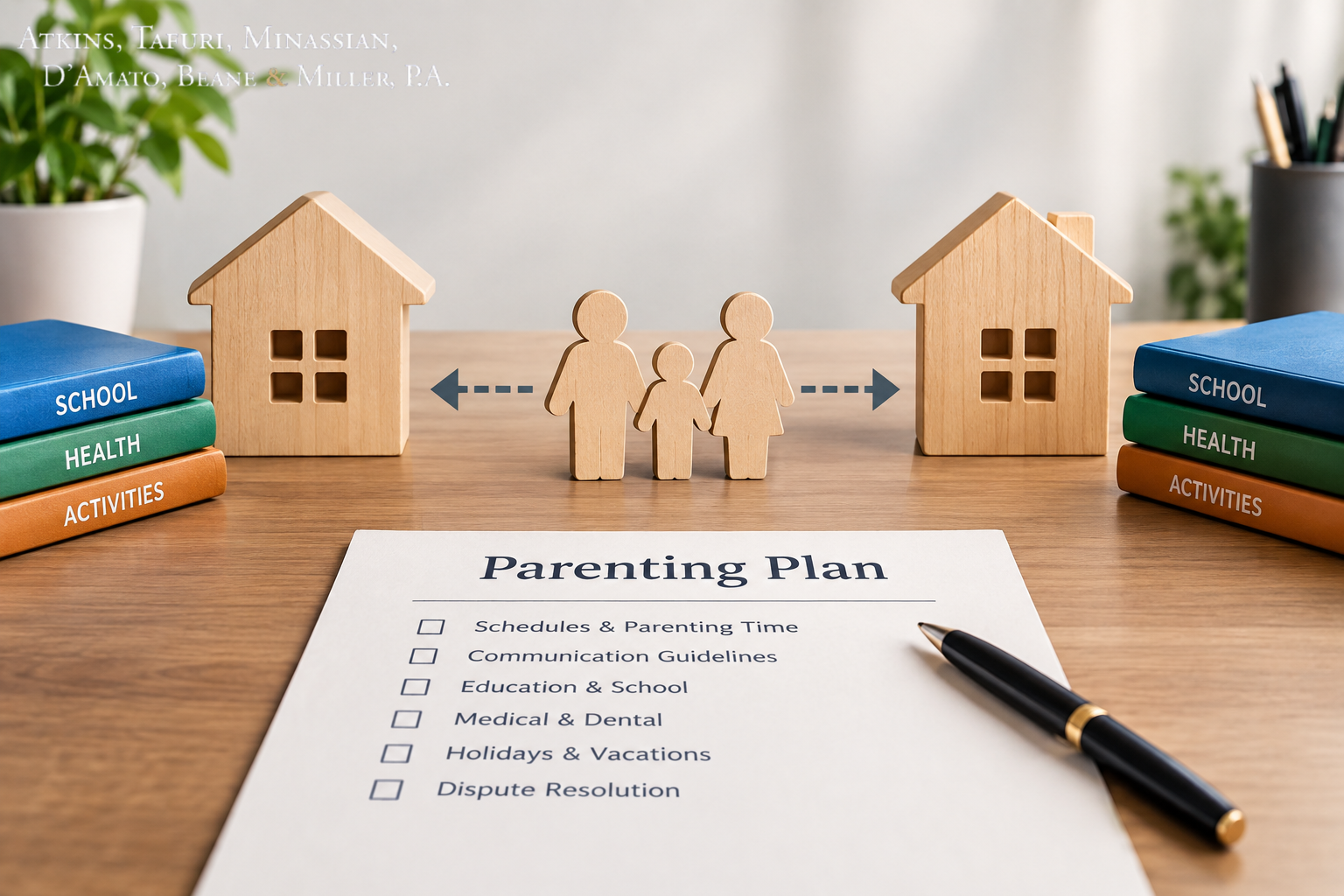
Parallel Parenting: When Co-Parenting Is No Longer an Option
Parallel parenting can provide structure when separated parents cannot communicate or cooperate without repeated conflict.
Traditional co-parenting requires regular coordination and shared decision-making. That approach may become difficult when disagreements remain constant or communication breaks down.
This route creates clearer boundaries while allowing both parents to remain involved. Each parent manages defined responsibilities with less interference from the other household. The arrangement can reduce unnecessary disputes and protect children from adult conflict. vidual circumstances.
What Is Parallel Parenting and How Does It Work?
It is a common question for parents dealing with high-conflict separation. This parenting option limits unnecessary communication between parents while preserving parenting time.
Each parent generally handles routine matters during their scheduled parenting periods. A written order can establish specific responsibilities and communication procedures.
This approach does not mean either parent becomes uninvolved. Instead, it creates boundaries around parenting decisions. The arrangement can address schedules, exchanges, school matters, medical information, holidays, and emergencies.
Coparenting vs Parallel Parenting
The difference between the two approaches mainly involves communication and shared decision-making. Traditional co-parenting encourages parents to coordinate frequently. Parents may discuss schedules, activities, education, healthcare, and other issues together.
The latter creates more independence between households. Parents generally follow predetermined responsibilities instead of negotiating every routine decision.
This distinction can be useful when communication repeatedly creates conflict. A parallel arrangement may provide:
- More predictable parenting schedules
- Fewer unnecessary conversations
- Defined decision-making responsibilities
- Clear exchange procedures
- Written communication requirements
- Greater separation between household routines
The objective is not to punish either parent. The objective is to make parenting more predictable for everyone.
What Should a Parallel Parenting Plan Include?
A detailed plan should address situations that commonly cause disagreements. Specific language can reduce confusion and limit repeated negotiations. The plan should reflect the child’s age, needs, schedule, and existing custody arrangement.
Important provisions may include:
- Regular parenting time and holiday schedules
- Pickup and drop-off locations
- Transportation responsibilities
- Communication methods and response expectations
- Education and school-related responsibilities
- Medical and dental decision-making
- Extracurricular activities
- Vacation and travel procedures
- Emergency communication
- Procedures for resolving disagreements
Written procedures can help parents follow the same expectations consistently. New Jersey courts may fashion custody arrangements according to the circumstances of each case.
Establishing Clear Parallel Parenting Rules to Reduce Conflict
Clear parenting rules can make daily interactions more manageable. Parents should focus communications on necessary information about their children. They should also avoid turning routine issues into broader disputes.
Helpful boundaries may include:
- Keep messages brief and focused.
- Use one agreed communication method.
- Follow the existing parenting schedule.
- Avoid using children as messengers.
- Keep adult disagreements away from children.
- Document significant scheduling problems.
- Share important school and medical information.
- Follow court orders unless properly modified.
Parents may still need to communicate about major issues. The difference is that communication becomes structured rather than constant.
Benefits and Disadvantages of Parallel Parenting
The disadvantages of this approach should be considered before adopting this approach. Reduced communication can make unexpected decisions more difficult. Children may also experience different routines between households.
Other possible challenges include:
- Less flexibility when circumstances change
- Difficulty coordinating unexpected activities
- Different household rules
- Greater reliance on written procedures
- Potential disputes over unclear provisions
It may also be inappropriate in certain circumstances. Safety concerns can require additional protections or different custody arrangements. The arrangement should therefore address the actual problems affecting the family.
Practical Parallel Parenting Strategies
Effective strategies focus on consistency instead of winning disagreements. Parents can keep communication limited to necessary child-related matters. They can also create routines that reduce opportunities for conflict.
Consider these practical approaches:
- Communicate through writing when appropriate.
- Keep messages factual and neutral.
- Respond only to relevant parenting issues.
- Follow exchange times consistently.
- Maintain reliable routines in each household.
- Avoid criticizing the other parent around children.
- Keep important records organized.
- Ask for clarification when an order is ambiguous.
A parenting coordinator is not necessarily appropriate for every family. Legal advice can help determine whether this option fits the circumstances.
When Parallel Parenting After Separation May Be Appropriate
This option may become an option when ongoing conflict makes traditional cooperation unrealistic. It can provide structure without removing either parent from the child’s life.
New Jersey law emphasizes the protection and welfare of children. It also encourages continuing contact with both parents when that serves the child’s best interests.
Courts consider numerous custody factors, including:
- The parents’ ability to communicate and cooperate
- The child’s relationship with each parent
- The child’s needs
- The stability of each home
- The child’s safety
- The history of domestic violence
- Each parent’s involvement before and after separation
These factors make custody decisions highly dependent on individual circumstances.
Protect Your Child’s Stability
Parallel parenting is not about eliminating a parent’s role. It creates boundaries when direct cooperation repeatedly produces conflict.
A carefully structured arrangement can clarify schedules, communication, responsibilities, and decision-making. It can also reduce situations where children become caught between parental disagreements.
Atkins, Tafuri, Minassian, D’Amato, Beane & Miller, P.A. handles divorce, custody, support, and other family law matters throughout Bergen County. The firm reports more than 200 years of combined legal experience and an AV Preeminent rating from Martindale-Hubbell.
If you are considering parallel parenting, contact Atkins, Tafuri, Minassian, D’Amato, Beane & Miller, P.A. or call 201-967-5060.
Frequently Asked Questions

Is parallel parenting better than co-parenting for high-conflict parents?
This parenting approach may be more workable when parents cannot communicate without frequent disputes. Traditional co-parenting usually requires greater cooperation and coordination.
A parallel arrangement creates more separation between parenting responsibilities. Parents can follow defined schedules and communicate only when necessary. This structure may reduce opportunities for arguments and misunderstandings. However, it is not automatically appropriate for every family.
Can parents use parallel parenting without going to court?
Parents may agree to a parenting arrangement without litigating every issue. However, informal agreements can create uncertainty if disagreements later arise. A written agreement or court order can provide clearer expectations about parenting time and responsibilities.
Parents should understand how existing custody orders affect any proposed changes. If parents cannot reach an agreement, the court may determine custody based on the child’s best interests.
New Jersey courts can consider the parents’ ability to communicate and cooperate, along with other statutory factors. Legal guidance can help parents understand available options before making significant changes.
What should I do if my co-parent keeps causing conflict?
Start by reviewing your existing custody order or parenting agreement. Follow its requirements rather than creating informal rules during disagreements.
Keep communications focused on your child and document significant issues objectively. Avoid involving your child in adult disputes or asking the child to carry messages. If communication repeatedly breaks down, discuss whether a more structured parenting arrangement could help.
New Jersey provides parenting coordination in certain circumstances to assist with day-to-day parenting issues. If safety concerns exist, seek appropriate legal guidance promptly rather than relying solely on informal arrangements.